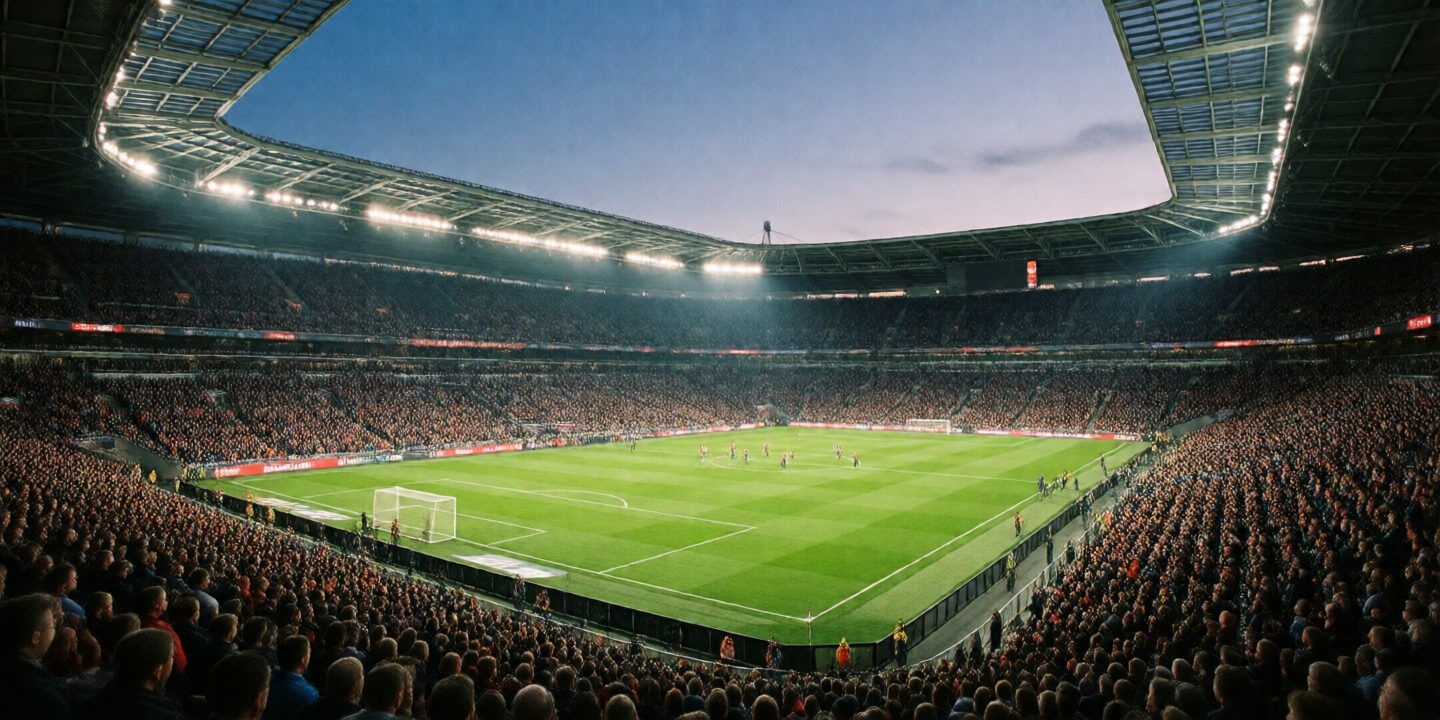
Why Premier League Fixtures 2026 Keep Moving
The Premier League fixtures 2026 refers primarily to the 2026–27 English top-flight schedule, which will be created by the Premier League and published after the 2025–26 season concludes. The campaign...
Why Premier League Fixtures 2026 Keep Moving
The Premier League fixtures 2026 refers primarily to the 2026–27 English top-flight schedule, which will be created by the Premier League and published after the 2025–26 season concludes. The campaign is expected to begin in August 2026 and run through May 2027, but exact opponents, kick-off times and television selections are not yet safely treated as final. The schedule will also sit beside the FIFA World Cup 2026, hosted by the United States, Canada and Mexico, creating unusual planning pressure for clubs, players and supporters. BBC Sport, Sky Sports, ESPN and the official Premier League website will publish updates, while Fan Strategy will track match context, tactics and tournament-related developments. The practical takeaway is simple: use the official fixture release for dates, then recheck every match after broadcast and cup changes.

Photo by Mario Spencer on Pexels
The first trap is assuming that a fixture list is a finished product the moment it appears online. It is not. The initial Premier League schedule normally provides the framework: matchweek, opponent, home or away status and a provisional date. It does not guarantee a Saturday 3 p.m. kick-off, a train-friendly finish time or a stable television slot. Manchester United, Liverpool, Arsenal, Chelsea and Manchester City may all appear on the same Saturday in the first release, but broadcasters can later move selected matches to Friday, Saturday evening, Sunday or Monday.
That distinction matters more than most supporters realise. A hypothetical six-match away run based on first-published dates could be disrupted when fixtures move after television selection or domestic cup clashes, potentially making the travel plan financially pointless. The football prediction may remain sound even when the calendar assumption does not. In practical terms, the schedule has a gross date and a net usable date, much like an investment has a headline return and an actual return after fees.
If you need the confirmed 2026 schedule: use the official release first
The official Premier League fixture release is the best starting point because it identifies the competition, matchweek and club pairing before secondary websites add speculation. For the 2026–27 season, supporters should confirm the publication date through Premier League official fixtures, then cross-check changes through club websites such as Arsenal.com, LiverpoolFC.com, ManchesterCity.com and ChelseaFC.com. Do not treat a search-result snippet, fan-made spreadsheet or social-media graphic as authoritative when money, travel or accommodation is involved.
The important distinction is between “fixture released” and “fixture confirmed.” A released match may show a nominal date, while a confirmed match has a final kick-off time after broadcasting, policing requirements and competition conflicts have been considered. UEFA Champions League participants such as Manchester City, Liverpool and Arsenal may also face European scheduling demands, while FA Cup and Carabao Cup progress can force domestic rearrangements. The Premier League’s official competition information is therefore more useful than a static image circulating on X.
A disciplined checking routine looks like this:
- Confirm the opponent and home or away status on PremierLeague.com.
- Check the club’s own ticketing and travel notice.
- Review Sky Sports, TNT Sports or BBC Sport for broadcast movement.
- Recheck the fixture 30 days, 14 days and 48 hours before travel.
- Record the final date separately from the original release date.
This approach sounds fussy, but it prevents the most expensive error: buying non-refundable transport before the fixture reaches its final state. The Football Supporters’ Association regularly highlights supporter concerns around late scheduling and travel, and its broader message is sensible: fixture information is operational information, not merely entertainment content.
If you are following the schedule for match analysis rather than travel, the same rule applies. Fan Strategy can use the first release to build a watchlist for Arsenal, Liverpool, Manchester United, Tottenham Hotspur and Newcastle United, but tactical conclusions should wait for confirmed context. A Sunday evening match after a Champions League trip is not equivalent to a Saturday afternoon match after a full week of preparation.
Want the practical schedule-tracking method in one place?
If you are planning travel: price the whole trip, not just the ticket
Travel planning around Premier League fixtures 2026 requires a larger calculation than finding a stadium and buying a match ticket. London matches involving Arsenal, Chelsea, Tottenham Hotspur, Brentford, Crystal Palace or Fulham can look geographically close on a map, yet the actual cost varies sharply by kick-off time, rail engineering works and post-match transport. Liverpool and Everton fixtures carry a similar issue because Merseyside travel capacity, local policing and derby demand can affect the useful arrival and departure window.
A simple trip ledger should include:
| Cost or risk item | Why it matters | Sensible planning rule |
|---|---|---|
| Match ticket | Prices vary by category and membership status | Confirm club allocation and resale rules |
| Rail or air travel | Late changes can make tickets unusable | Prefer flexible fares when possible |
| Accommodation | Popular weekends sell out quickly | Book cancellable rooms first |
| Local transport | Night kick-offs reduce options | Check the final whistle-to-station route |
| Match rescheduling | Television and cup ties can intervene | Keep a contingency window |
| Food and incidental spend | Often ignored in headline budgets | Add a fixed per-person allowance |
Here is a concrete example. Suppose a supporter books a Manchester United away weekend at an initial Saturday 3 p.m. slot: £85 return rail travel, £140 for one night, £60 for food and local transport, and a £75 match ticket. The expected total is £360. If television moves the match to Monday evening, the rail ticket may become unusable, the hotel needs a second night and the revised total can exceed £520. The fixture did not become more exciting; the net position became worse by £160.
Expected cost should be tracked rather than sticker price. Across hypothetical match trips in London, Manchester and Liverpool, the largest budget errors can come from date risk rather than ticket cost. Supporters often spend hours comparing £5 ticket differences while ignoring a £90 non-refundable hotel exposure. That is a contrarian point worth keeping: the cheapest match ticket is not necessarily the cheapest matchday.
For international visitors, official club ticketing is especially important. Arsenal, Chelsea, Liverpool and Manchester City each have different membership, hospitality and resale procedures. Unauthorised sellers may advertise attractive seats, but the risk includes invalid tickets, restricted views and refusal at the turnstile. The UK Government foreign travel advice is not a ticketing guide, but it remains a useful reference for visitors managing documentation, transport disruption and local conditions.
Use Premier League matchday travel planning when creating a personal itinerary, and keep every booking tied to a fixture-status note. “Released” should be marked amber; “broadcast confirmed” should be marked green; “subject to cup change” should remain amber even if a television provider has selected it.

Photo by Rahul Pandit on Pexels
A second case makes the point. Imagine Tottenham Hotspur versus Newcastle United initially listed for Saturday, 22 August 2026. A traveller books a London hotel, a restricted rail fare and a Sunday return. If the match moves to Sunday evening, the return journey may fail even though the distance has not changed. The operational outcome is a lost hotel night, a replacement ticket and a much higher total. The right response is not panic; it is a cancellation-first booking strategy.
If you are analysing the season: separate fixture strength from fixture sequence
Fixture difficulty is often discussed as if it were a permanent property of an opponent. It is not. Liverpool at Anfield in August is one analytical situation; Liverpool at Anfield after ten matches, international travel and injuries is another. Arsenal, Manchester City, Aston Villa and Brighton & Hove Albion may all have different levels of squad depth, pressing intensity and European workload by the time a scheduled match arrives.
For supporters using Premier League fixtures 2026 to evaluate title or relegation prospects, the sequence deserves more attention than the famous names. A club may face Manchester City, Chelsea and Liverpool across four weeks, but the effect depends on home advantage, rest days, manager continuity and travel. A newly promoted club could prefer facing established opponents early, before tactical systems settle, while a Champions League club may value a difficult league match immediately after an international break rather than after European travel.
The basic analytical framework is:
- Opponent quality: league position alone is insufficient; use points, expected goals and squad availability.
- Location: home and away performance can differ substantially.
- Rest: count days since the previous competitive match.
- Travel: include European destinations and domestic distance.
- Competition overlap: check UEFA Champions League, UEFA Europa League, FA Cup and Carabao Cup commitments.
- Calendar compression: identify three-match or four-match windows.
- Managerial context: a new coach can change pressing, possession and selection patterns quickly.
The Premier League Handbook provides the competition framework, while UEFA publishes European competition schedules that help explain possible congestion. A schedule cannot predict injuries, but it can reveal where injury risk and rotation pressure may become more likely.
One non-obvious insight is that a “soft” opening month can be strategically dangerous. If a club accumulates points against lower-ranked opposition, public expectations rise before the first major test. A poor result against Manchester City or Liverpool then appears to be a collapse, even when the underlying performance is ordinary. Conversely, a difficult opening may produce a modest points total but better tactical information. In other words, fixture difficulty affects narrative risk as well as sporting risk.
A named example clarifies the issue. If Manchester City receives a run containing Everton, Nottingham Forest and Bournemouth before meeting Arsenal, a strong record may reflect favourable matchups rather than proof of championship superiority. If Aston Villa plays Newcastle United, Tottenham Hotspur and Chelsea in the same period, a lower points return may contain more useful evidence about defensive structure and midfield control. The scoreline is the outcome; the sequence is the explanation.
Fan Strategy’s role is to connect the schedule with match predictions, team tactics and player statistics without pretending that an August fixture list settles a May title race. For deeper context, see Premier League tactical previews and team form and player statistics.
Get the broader match-analysis perspective before the schedule starts driving your assumptions.
If you are tracking the FIFA World Cup 2026: allow for a different calendar effect
The FIFA World Cup 2026 is a major calendar factor, but not necessarily in the way casual previews suggest. The tournament will be staged across the United States, Canada and Mexico, with 48 teams and a significantly expanded match programme compared with earlier editions. Premier League clubs will have players travelling from England to North America, and the recovery period after elimination will differ from player to player.
The official FIFA World Cup 2026 site should be used for tournament dates and venues. The Los Angeles host committee also describes eight matches in the city and 39 days of fan activity through its official tournament information. Those details matter for supporters planning football holidays, but the sporting effect is more complicated. A player eliminated in the group stage may return earlier than a player reaching the final, while travel across multiple time zones can affect preparation even after the competition ends.
A common mistake is to treat the World Cup as one large interruption and stop there. The more useful method is to create player-level scenarios:
- Early elimination: return to club training relatively soon, but with possible fatigue or disappointment.
- Round-of-16 or quarter-final exit: longer absence and less recovery time before domestic commitments.
- Semi-final or final participation: maximum workload, travel and emotional strain.
- No tournament involvement: potentially greater club preparation time, although preseason plans still matter.
- Injury during the tournament: a separate risk that cannot be estimated from fixture difficulty alone.
For example, Liverpool could have three regular starters reach the latter stages with different national teams, while Brentford could have far fewer players affected. That does not automatically make Brentford stronger in the first post-World Cup match; squad quality, replacement options and training continuity still matter. It does mean that a fixture involving Liverpool immediately after the tournament deserves a wider uncertainty range.
The World Cup may also alter how fans interpret early-season form. If a Manchester United midfielder returns from North America late, a reduced pressing output in August could reflect preparation time rather than a tactical failure. If Chelsea rotates heavily, the match preview must distinguish planned rotation from a selection crisis. This is where Fan Strategy can add value: the schedule supplies the date, but player minutes, tactical roles and recovery context supply the explanation.

Photo by Caio on Pexels
Common pitfalls to avoid
The biggest Premier League fixtures 2026 errors are predictable, which is good news because predictable errors can be removed. The first is trusting an old article that quietly carries a 2025–26 date into the 2026–27 season. The second is confusing a provisional kick-off with a confirmed one. The third is treating a club’s calendar as independent from UEFA, FIFA, the FA and domestic cup organisers.
Avoid these mistakes:
- Using the wrong season: “2026 fixtures” can mean the second half of 2025–26 or the 2026–27 campaign.
- Assuming every match is Saturday at 3 p.m.: television selection regularly changes this.
- Booking non-refundable travel immediately: wait for broadcast confirmation where possible.
- Ignoring cup progression: FA Cup and Carabao Cup ties can produce postponements.
- Overrating opening-weekend difficulty: one match is not a full strength-of-schedule sample.
- Copying unverified social posts: graphics may omit time zones, competition labels or revisions.
- Treating ticket resale as risk-free: club rules and identity checks differ.
- Forgetting the FIFA World Cup: player availability may change after the tournament.
- Counting a moved fixture twice: keep original and revised dates in separate columns.
- Making betting decisions from fixtures alone: scheduling is context, not a guarantee.
The last error deserves special emphasis because it affects both fans and gamblers. A perceived fixture edge is not a guaranteed betting edge. Odds already incorporate public information, and the market may react faster than an individual schedule spreadsheet. Responsible gambling guidance from the UK Gambling Commission is relevant here: set limits, do not chase losses and treat match predictions as uncertain probabilities rather than income.
Here is a useful spreadsheet structure:
| Column | Example |
|---|---|
| Club | Arsenal |
| Opponent | Liverpool |
| Original date | 15 August 2026 |
| Current date | To be confirmed |
| Broadcast status | Not selected |
| Competition conflict | UEFA or domestic cup check |
| Travel cost | £210 |
| Cancellation deadline | 30 July 2026 |
| Confidence rating | Amber |
| Last checked | 1 July 2026 |
Across fixture information from BBC Sport, Sky Sports, ESPN and club websites, the most useful field is not “prediction.” It is “last checked.” That small operational detail exposes stale information immediately. A page published yesterday and a page published six months ago can look equally polished, while only one reflects the latest schedule change.
Another contrarian point: a late change can improve a supporter’s experience. A Sunday match may be less convenient for a day trip, but it can create cheaper Saturday travel and better hotel availability. The financial result depends on the whole itinerary, not on whether the new kick-off feels inconvenient. Track the net position before judging the change.

Photo by Mikhail Nilov on Pexels
The 30-day check-in
Thirty days before each important Premier League fixture 2026, conduct a formal review rather than casually searching the match again. Check the Premier League, the relevant club, the broadcaster, local transport providers and any European or domestic cup conflict. At this point, accommodation cancellation deadlines become critical, and a supposedly flexible booking may become expensive after the free-cancellation window closes.
The review should answer five questions:
- Is the opponent and venue unchanged?
- Is the kick-off time officially confirmed?
- Has the match been selected by a broadcaster?
- Are FA Cup, Carabao Cup or UEFA conflicts possible?
- What is the current total travel and ticket cost?
At the 14-day mark, check again for operational changes, rail engineering works and club supporter instructions. At 48 hours, confirm the club’s matchday guidance, stadium entry requirements and local transport. This three-stage process is deliberately boring. Boring is useful when the alternative is a lost ticket or an unnecessary £160 cost increase.
For match analysis, the 30-day check-in should add squad news, recent minutes, manager comments and player workload. A fixture between Tottenham Hotspur and Newcastle United may look unchanged on the calendar while the tactical conditions have shifted completely. Compare expected line-ups, injuries, European travel and rest days rather than recycling the original preview.
Fan Strategy can make this process more useful by pairing fixture updates with daily World Cup coverage, player statistics and tactical notes. The aim is not to make certainty sound more impressive than it is. The aim is to identify what changed, quantify its likely effect and show the reader which assumption needs checking next.
The final practical action is therefore clear: create a 2026–27 fixture tracker now, mark every unconfirmed match amber, and perform the first formal review 30 days before travel. Recheck at 14 days and again 48 hours before kick-off. If you are considering a wager, set the budget before reading the preview, record the stake and never increase it to recover a loss.
See the latest football planning and analysis resources here.
Frequently Asked Questions
Q: What are the Premier League fixtures 2026?
A: Premier League fixtures 2026 generally refers to matches in the 2026–27 Premier League season, which is expected to run from August 2026 to May 2027. The official schedule will list club opponents, home or away status and provisional dates. Exact kick-off times may change after broadcast selection, FA Cup, Carabao Cup or UEFA scheduling decisions, so always verify the current version on PremierLeague.com and the relevant club website.
Q: When will the 2026–27 Premier League fixture list be released?
A: The 2026–27 Premier League fixture list is expected to be released after the 2025–26 season, although the exact publication date must be confirmed by the Premier League. The initial release normally gives supporters the season framework rather than every final kick-off time. Check the Premier League website, BBC Sport, Sky Sports and official club channels instead of relying on an unofficial date announcement.
Q: How do I check whether a 2026 Premier League match is confirmed?
A: Check the Premier League fixture page, the home club’s official website and the broadcaster’s schedule. A fixture is more reliable when the date and kick-off time appear consistently across those sources. Recheck at 30 days, 14 days and 48 hours before the match because television selections, domestic cups, UEFA competitions and transport issues can still affect practical planning.
Q: What is the difference between a released and confirmed Premier League fixture?
A: A released fixture provides the planned opponent, venue and nominal match date, while a confirmed fixture has a settled kick-off time after relevant scheduling decisions. Matches listed for Saturday at 3 p.m. may later move to Friday evening, Saturday evening, Sunday or Monday. This distinction is especially important for supporters booking trains, flights, hotels or non-refundable matchday packages.
Q: Will the FIFA World Cup 2026 affect Premier League fixtures?
A: The FIFA World Cup 2026 can affect player availability, recovery and club preparation, although its exact effect depends on each player’s national team progress. The tournament will take place in the United States, Canada and Mexico, and players reaching the later rounds may return later than group-stage exits. Track individual minutes, travel and training status rather than treating every club as equally affected.
Q: Can I book travel as soon as the Premier League 2026 schedule is published?
A: You can book early, but flexible or cancellable options are safer until the kick-off is broadcast-confirmed. A provisional Saturday date may move because of television, the FA Cup, Carabao Cup or UEFA commitments. Compare the full cost of rail or air travel, accommodation, local transport and ticket restrictions, and record the cancellation deadline before committing money.
Q: Is it sensible to use Premier League fixtures 2026 for betting predictions?
A: Fixtures can improve context, but they cannot guarantee a profitable betting decision. Assess opponent strength, home advantage, rest, injuries, European travel, player workload and market odds before considering any wager. Set a fixed budget in advance, avoid chasing losses and use official competition information rather than assuming that a difficult-looking sequence automatically creates betting value.
Keep the tracker current, verify every important change and review your position again at the 30-day mark.
Want to follow the 2026 football calendar with match predictions, tactical analysis and player statistics?
Thank you for reading.
Fan Strategy · Editorial Archive