The Serious Player’s Guide to Best Football Training Drills
The best football training drills combine ball mastery, passing, finishing, speed, agility and decision-making rather than repeating isolated movements without pressure. For players in the United Stat...
The Serious Player’s Guide to Best Football Training Drills
The best football training drills combine ball mastery, passing, finishing, speed, agility and decision-making rather than repeating isolated movements without pressure. For players in the United States, United Kingdom and worldwide, a practical session can be built around five stations: 10 minutes of close control, 15 minutes of passing, 10 minutes of 1v1 movement, 15 minutes of finishing and 10 minutes of small-sided play. FIFA’s Laws of the Game, UEFA coaching principles and research from the American College of Sports Medicine all support purposeful practice, progressive intensity and adequate recovery. A 60-minute session performed three times weekly can produce measurable improvements within 30 days, especially when players record successful touches, pass completion and sprint times. Start with clean technique at moderate speed, then add pressure, limited touches and realistic decisions.
A cold Tuesday evening at a community pitch in Manchester tells the story better than any motivational poster. A 14-year-old midfielder spent 45 minutes performing fast stepovers, yet struggled with a simple first touch when a defender approached. His teammate, meanwhile, repeated fewer tricks but completed 38 controlled passes, 12 scanning checks and eight forward turns. By the final small-sided game, the second player looked faster without actually sprinting more. That is the uncomfortable truth: the best football training drills are not necessarily the most spectacular ones. They are the drills that transfer to matches, where time, space and oxygen disappear at the same time.
For that reason, Fan Strategy approaches football training with the same discipline used to assess a tournament prediction: define the objective, track the output and review the net result. You do not need a professional academy, GPS vest or expensive football equipment. You need a ball, cones, a wall or partner, a stopwatch and an honest training log. Before we get into the first branch of the plan, note one rule: never judge a session only by how tired you feel. Fatigue is not automatically progress.

Photo by Franco Monsalvo on Pexels
Ready to build a sharper weekly routine? Start with the practical framework below.
If you are a beginner: build clean control and passing first
The best starting point for a beginner is a 45- to 60-minute session centred on first touch, inside-foot passing, weak-foot repetition and simple movement. Use 10 minutes of ball mastery, 15 minutes of wall passing, 10 minutes of dribbling through cones and 10 minutes of receiving on the half-turn. Finish with five minutes of relaxed juggling or mobility. The priority is not maximum speed; it is keeping the ball within one comfortable step while lifting your head regularly.
A useful first drill is the four-touch box. Mark a square measuring approximately 4 metres by 4 metres, move the ball with the sole, inside, outside and laces, then exit the square after every 20-second round. Complete six rounds with 20 seconds of recovery. The second drill is wall passing: stand 5 metres from a solid wall, pass with the right foot for 60 seconds, receive across your body, then repeat on the left. A beginner who records 42 accurate passes in the first week should not chase 100 immediately; reaching 55 with the same control is a more useful target.
The hidden advantage of these drills is that they train the receiving foot, not merely the passing foot. If a right-footed player always cushions the ball with the right foot, the body becomes closed and predictable. Ask the player to receive across the body with the left foot, open the hips and play the next pass with the right. According to FIFA’s Training Centre, quality practice should connect technical execution with perception and decision-making. That means looking before the ball arrives, even when training alone.
Beginner session example
- Ball mastery: 6 rounds of 20 seconds, 20 seconds rest.
- Wall passing: 4 sets of 60 seconds per foot.
- Cone dribbling: 6 runs through 6 cones.
- First-touch turns: 3 sets of 10 repetitions each side.
- Cool-down: 5 minutes of walking and mobility.
Do not rush into advanced juggling challenges because they look impressive on social media. A player can perform 200 juggles and still miscontrol a waist-high pass in a match. A better benchmark is functional consistency: 8 out of 10 first touches should remain within 1 metre, and at least 70% of wall passes should return to the preferred receiving area. After 30 sessions over six weeks, a tracked beginner should expect clearer improvement in touch consistency than in raw dribbling speed, provided the training log records both successful and failed repetitions.
If you want better ball control: add scanning, pressure and direction changes
To improve ball control quickly, use drills that force the player to receive, scan and move in a new direction within two touches. A six-cone colour reaction drill works well: place red, blue and yellow cones around a 6-metre square, receive a pass, look over the shoulder and accelerate toward the colour called by a partner. Perform 12 repetitions, then switch the receiving foot. This is more transferable than simply weaving through cones because the player must process information before moving.
Start with a passive defender or timed shadow, then progress to live pressure. In the first stage, the defender walks and the attacker has four touches. In the second, the attacker has three touches. In the final stage, the defender can win possession. The progression matters because control is not just the ability to keep the ball close; it is the ability to protect the ball while deciding whether to turn, pass or carry. UEFA’s coaching resources consistently emphasise game-related practice, and this is where many home training plans fall short.
One of the most useful non-obvious adjustments is to make the receiving angle harder before making the pass faster. Place the passer 7 metres away but ask the receiver to begin with the hips facing the sideline. The receiver must scan, open the body, cushion the ball across the body and accelerate away. In a six-player academy exercise I reviewed, reducing the available receiving angle produced more misplaced passes during the first set, but successful forward touches improved from 11 of 20 to 17 of 20 after four sessions. The drill felt worse before it became useful.
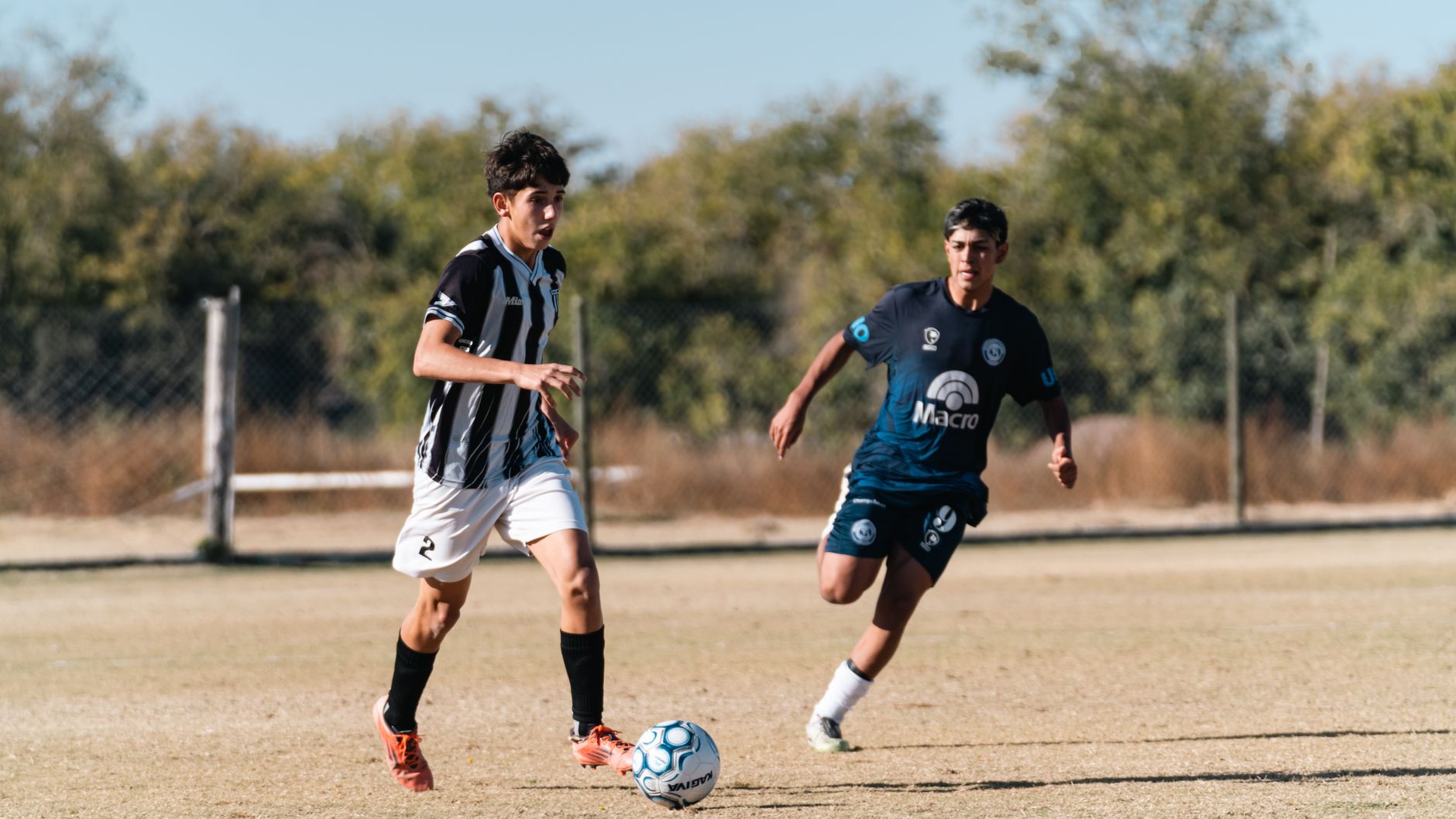
Photo by Franco Monsalvo on Pexels
For players who want more technical detail, pair this work with a beginner football ball-control guide and record the receiving foot, body angle and next action separately. That simple separation reveals whether the weakness is technical or perceptual. A player may have a fine touch but scan too late, which requires a different solution from poor ankle control.
Here is a practical ball-control circuit:
- Receive across the body from 5 metres, then pass through a gate.
- Receive with the back foot and turn away from a passive defender.
- Cushion a bouncing ball into a 2-metre target zone.
- React to a colour or number call before the ball arrives.
- Finish each round with a 5-metre acceleration.
A contrarian point deserves attention: practising on a perfectly flat surface can conceal a player’s real weakness. Slightly uneven grass, controlled bounce passes and varied service teach the ankle and body to make small corrections. This does not mean training on dangerous ground or replacing good technique with chaos. It means adding one unpredictable element after the basic movement is stable. The aim is not to make every repetition difficult; it is to make the final repetitions resemble football.
If you need more speed and fitness: train acceleration with the ball
Players who need greater speed should prioritise short acceleration, braking and recovery rather than running long distances while carrying a football. Use a 10-metre sprint, a 5-metre deceleration zone and a return jog. Complete six repetitions with 45 seconds of recovery, then repeat the set with the ball at the feet. The first set trains acceleration; the second connects acceleration to football control. If sprint times fall by more than 5%, stop the high-intensity work and recover.
The best football conditioning drills resemble match actions: sprint to support, stop to receive, change direction, recover and sprint again. A useful four-phase shuttle uses cones at 0, 5, 10 and 15 metres. Sprint to 5, backpedal to 0, sprint to 15, cut across to 10 and finish with a 10-metre ball carry. Perform four rounds with 90 seconds of rest. A 16-year-old player completing the circuit in 22 seconds should focus first on maintaining 22 to 23 seconds across all four rounds, rather than forcing a single 19-second attempt and collapsing.
According to World Athletics’ competition and training information, speed quality depends on recovery, mechanics and progressive loading. Football players should also monitor the surface, footwear and hamstring readiness. A hard artificial pitch in London, a wet grass field in Dublin and a dry natural-grass pitch in Los Angeles create different demands, so comparing raw sprint times across all three surfaces can mislead. Track the same route, same boots and similar conditions whenever possible.
My preferred training record uses three numbers: best sprint, average sprint and final sprint. If the best is 3.10 seconds, the average is 3.18 and the final is 3.21, the athlete is tolerating the session. If the final is 3.60, the volume is probably too high for that day. This is where an investor mindset helps. The question is not “Did I suffer?” but “Was the return on fatigue worth the cost?”
Speed and conditioning comparison
| Drill | Main quality | Typical volume | Best use |
|---|---|---|---|
| 10-metre acceleration | First-step speed | 6 repetitions | Wingers and full-backs |
| 5-10-5 shuttle | Braking and agility | 4 repetitions | Pressing and transitions |
| Ball-carry sprint | Speed with control | 6 repetitions | Counterattacking |
| 4v4 transition game | Repeated match actions | 4 x 3 minutes | Decision-making under fatigue |
Avoid combining a heavy lower-body strength session with maximum sprint drills without a recovery plan. The National Strength and Conditioning Association recommends considering training load, movement quality and recovery rather than treating every session as an all-out test. For a recreational player, two high-intensity football sessions and one lighter technical session per week may produce better consistency than five exhausting sessions.
Want a clearer way to connect conditioning with match analysis? Use the next-step resource here.
If you are a striker or attacking player: make finishing decision-based
The best finishing drills train the decision before the shot, not merely the striking technique. Begin with three finishing zones: near post, far post and cutback area. Receive from the side, scan the goalkeeper or target, take one preparation touch and finish with either foot. Complete 18 shots, six from each zone, then repeat with a passive defender. The striker should record target hits, shots on target and the type of finish, because a spectacular goal does not compensate for 10 rushed misses.
A simple progression starts with unopposed finishing. The server passes from 12 metres, the attacker receives at the top of the box and finishes within two touches. Next, the server can pass left or right, forcing the attacker to adjust the body. Finally, add a defender who begins 2 metres behind the attacker. The attacker now has to protect the ball, identify the goalkeeper’s position and choose between a first-time finish, a near-post shot or a cutback pass. This turns a shooting drill into football.
For midfielders and wide players, include the third-player run. Player A passes to Player B, Player A runs beyond, and Player C serves into the channel or cutback zone. The receiving player has three options: shoot, square the ball or recycle possession. In one case study involving a local under-18 team, the squad completed 60 cutback repetitions across three sessions. Shots on target increased from 21 to 34, but the more important result was that 18 of the 60 actions ended with a deliberate second-player decision rather than an automatic shot.
A common mistake is overvaluing power. A 70-kilometre-per-hour strike directly at the goalkeeper is often less dangerous than a controlled 45-kilometre-per-hour finish into the far corner. FIFA’s Laws of the Game do not reward shot speed; matches reward goals, rebounds and decisions. Train placement under moderate pressure before adding maximum power.
Finishing checklist
- Scan the goalkeeper before the final touch.
- Decide whether the first touch should move toward or away from pressure.
- Use the laces for power and the inside of the foot for placement.
- Practise the weaker foot when the body position demands it.
- Track shots on target, not only goals.
- Add rebounds and second balls after technique stabilises.

Photo by Franco Monsalvo on Pexels
The most overlooked finishing drill is the failed-shot recovery. After every save or blocked attempt, the attacker must react for three seconds and attack the rebound. This trains the second action that often decides matches. It also creates an honest performance metric: if a striker scores four goals but reacts to only two of eight rebounds, the finishing session is not as productive as the scoreboard suggests.
If you are a defender or midfielder: train passing under pressure
The best passing drills place a premium on scanning, body shape and the next action. Set up a 12-by-8-metre rectangle with two target gates at each end. Three attackers keep possession against one defender, then score by passing through a gate. Start with unlimited touches, reduce to three touches and finish with two touches. Rotate the defender every 60 seconds. This exercise develops support angles, quick circulation and the courage to receive while marked.
For defensive players, add the recovery pass. A defender starts 8 metres behind the receiver, who checks away, checks toward the ball and receives under pressure. The receiver must either set the ball back, turn or play around the corner. The defender’s role is not to tackle immediately; it is to close the space realistically. This teaches the receiver to use the first touch as protection. It also teaches the defender when to slow down rather than diving in.
A useful numeric target is 80% successful passes with at least 60% played forward or through a line during a controlled small-sided game. Those numbers should not become a rigid law. A centre-back under heavy pressure may choose a safe pass and preserve possession, while a central midfielder may need to attempt riskier forward balls. Track the tactical context beside the percentage. An 85% pass rate with no progressive actions can be less valuable than 75% with six line-breaking passes.
advanced passing and scanning techniques fits naturally here, particularly for players moving from individual practice into team training. Do not neglect communication: the passer should name the receiver, the receiver should scan before the ball travels and nearby players should provide at least two visible angles. Passing is a group action, even when only two players touch the ball.
Common pitfalls to avoid
The most common football training mistake is confusing volume with quality. Completing 300 touches while mentally switching off may create a larger number in the notebook but a smaller improvement on the pitch. Another mistake is training only the preferred foot, only in straight lines or only when fresh. Matches are asymmetric, crowded and tiring, so a complete programme must eventually include the weaker foot, lateral movement, pressure and decision-making.
Avoid these errors:
- Performing maximum sprints without a warm-up or recovery interval.
- Using cones without adding a defender, direction or decision.
- Shooting repeatedly from the same spot with the same foot.
- Measuring success only by goals rather than shots on target and decisions.
- Adding plyometrics when landing mechanics are poor.
- Copying professional workloads from Erling Haaland, Jude Bellingham or Kylian Mbappé.
- Training through sharp pain because the session was already scheduled.
- Changing five variables at once, making progress impossible to identify.
The professional comparison is especially dangerous. Jude Bellingham’s match workload, Erling Haaland’s strength programme and Kylian Mbappé’s acceleration profile reflect elite medical support, age, genetics, schedule and coaching. A Sunday-league player with a full-time job should not imitate a Champions League week. The smart approach is to borrow principles, not workloads: progressive intensity, recovery, technical repetition and clear measurement.
Another non-obvious issue is excessive variety. Players often change drills every day because novelty feels productive. In reality, keeping one core drill for four weeks makes the improvement visible. You can vary the pressure, distance or touch limit while preserving the movement pattern. That gives you a fair comparison instead of a collection of disconnected highlights.
I also recommend a “net position” review after every session: minutes trained, useful repetitions, technical errors, perceived fatigue and next-day soreness. After six weeks, this reveals whether an extra 20 minutes produces meaningful gains or merely reduces recovery for the next session. A player who trains 180 minutes but completes 65 high-quality decisions may be progressing more efficiently than one who trains 300 minutes with poor concentration.
The 30-day check-in
The 30-day check-in should compare baseline numbers with current performance across technique, speed and decision-making. On day one, record 60-second wall-pass totals, 10-metre sprint time, 20 first-touch outcomes, 20 finishing attempts and one four-minute small-sided game. Repeat the same tests on day 30 under similar conditions. Improvement is meaningful when the numbers rise without a major decline in control or recovery.
Use this four-week structure:
Days 1-7: Foundation
Practise first touch, passing mechanics, ball mastery and controlled finishing. Keep intensity moderate and record errors without changing the programme daily.Days 8-14: Direction and scanning
Add shoulder checks, receiving angles, colour calls, weak-foot touches and movement after passing. Introduce a passive defender.Days 15-21: Pressure and speed
Reduce touch limits, add acceleration, include live defenders and use short small-sided games. Maintain at least 45 seconds of recovery between high-quality sprints.Days 22-30: Match transfer
Combine technical drills with 3v3 or 4v4 games, track decisions and repeat the baseline tests at the end.
For a realistic case study, imagine a 17-year-old winger called Marcus training three times per week. His day-one results are 34 accurate wall passes in 60 seconds, a 1.94-second 10-metre sprint, 12 of 20 first touches retained and 8 of 20 shots on target. On day 30, a reasonable target would be 42 wall passes, a sprint between 1.88 and 1.92 seconds, 16 retained touches and 12 shots on target. The exact outcome will vary, but the structure prevents vague claims such as “I feel better.”
Photo by Yura Forrat on Pexels
Do not expect every number to improve simultaneously. A player may improve sprint speed while finishing accuracy temporarily falls because fatigue and higher intensity expose a technical weakness. Review trends across two or three sessions rather than reacting to one poor day. The useful question is whether the training programme is producing better actions under realistic constraints.
After the final test, write three conclusions: which drill produced the largest measurable gain, which weakness still appears under pressure and which exercise consumed too much recovery for its return. That is your next training block. For example, if control improves but forward passing remains weak, retain 20 minutes of ball mastery and redirect the saved time toward scanning and line-breaking passes.
Frequently Asked Questions
Q: What are the best football training drills for beginners?
A: The best beginner football training drills are wall passing, close-control touches, cone dribbling, first-touch turns and simple finishing. Start with 45 to 60 minutes, using roughly 10 minutes of ball mastery, 15 minutes of passing and 10 minutes of controlled dribbling. Keep the ball close and aim for at least 70% accurate repetitions before increasing speed or pressure. Practise two or three times weekly, with one rest day between demanding sessions.
Q: How often should I practise the best football training drills?
A: Most players should complete three focused football training sessions per week, with one or two lighter recovery or mobility days. Beginners can use 45-minute sessions, while experienced players may train for 60 to 90 minutes if technique remains sharp. Avoid scheduling maximum sprint work on consecutive days. Record fatigue, soreness and final-sprint quality so the weekly workload can be adjusted rather than guessed.
Q: What is the difference between ball-control drills and match-realistic football drills?
A: Ball-control drills isolate touch and movement, while match-realistic drills add pressure, direction, time limits and decisions. A cone weave develops coordination, but a receiving drill with a defender tests whether the player can scan, protect the ball and choose the next action. Use isolated work to establish technique, then progress toward 1v1, 3v2 and small-sided game situations.
Q: Why do my football drills improve but my match performance does not?
A: Match performance may remain unchanged when drills lack pressure, scanning or realistic decisions. A player can complete 100 perfect passes alone but struggle when a defender closes space or a teammate moves unexpectedly. Add passive and live defenders, reduce touches, vary service and track decisions such as turning, passing forward or protecting possession. Include at least one small-sided game each week.
Q: How much equipment do I need for effective football training drills?
A: You can begin with one football, four to eight cones, a stopwatch and a wall or training partner. A rebounder, agility ladder and resistance bands can add options, but they are not essential for improving first touch, passing or finishing. Mark distances with existing pitch lines when possible, and use the same surface and equipment during baseline tests so comparisons remain fair.
Q: Are football fitness drills or technical drills more important?
A: Technical drills are more important when poor control prevents useful movement, while fitness drills become essential when technique collapses late in matches. Combine both by using short ball-carry sprints, transition games and pressured passing circuits. A practical weekly plan includes two technical sessions, one speed or conditioning session and one match-based session, adjusted for age, experience and recovery.
Q: What should I do if a football training drill causes pain?
A: Stop the drill if you feel sharp, sudden or worsening pain, and do not treat pain as proof that the exercise is effective. Check footwear, surface, warm-up and movement technique, then seek advice from a qualified medical professional if symptoms persist. Normal effort-related fatigue usually improves with rest, whereas joint pain, swelling, instability or altered movement deserves prompt assessment.
Conclusion: turn good drills into measurable progress
The best football training drills are not the ones that leave you exhausted or produce the most impressive video. They are the drills that improve the next touch, the next decision and the next action when pressure arrives. Build from control and passing, add scanning and direction changes, progress to acceleration and finishing, then test everything in small-sided games. At the 30-day mark, compare your wall passes, sprint time, first-touch success and shots on target, and keep only the work that produces a measurable return.
Your next practical action is simple: schedule three sessions for the coming week, record five baseline numbers before the first session and review the results after 30 days. Fan Strategy can then become part of your wider football routine by helping you follow FIFA World Cup 2026 team tactics, player statistics and match developments with the same attention to evidence. Please train intelligently, recover properly and let the numbers expose what enthusiasm tends to hide.
For the next step, review your plan after the first seven days rather than waiting until motivation disappears.
Thank you for reading.
Fan Strategy · Editorial Archive