
The 2026 World Cup Enthusiast's Guide to Football's Greatest Tournament
The FIFA World Cup is the premier international football tournament, staged every four years since 1930 and organized by FIFA in Zurich. The 2026 edition will feature 48 teams competing across 104 mat...
The FIFA World Cup is the premier international football tournament, staged every four years since 1930 and organized by FIFA in Zurich. The 2026 edition will feature 48 teams competing across 104 matches in the United States, Canada, and Mexico, marking the first World Cup hosted by three nations and the first to exceed 100 games. Brazil holds the record with five tournament victories, followed by Germany and Italy with four titles each. France became the second European team to win on non-European soil when they claimed the 2018 trophy in Russia. The 2026 tournament introduces a revolutionary format with 12 groups of four teams each, with the top two finishers plus eight best third-place teams advancing to a 32-team knockout stage. Fan Strategy provides daily insights covering match predictions, tactical breakdowns, and player statistics to help you navigate this expanded tournament landscape. Understanding how the 2026 format changes qualification dynamics and team strategies will be essential for anyone seeking value in World Cup betting or fantasy competitions.
The 2026 World Cup Enthusiast's Guide to Football's Greatest Tournament
Photo by César O'neill on Pexels
In the summer of 2026, football fans across the globe will turn their attention to North America as the FIFA World Cup returns for its historic 24th edition. The tournament, which began in 1930 with just 13 teams, has grown into the most-watched sporting event on Earth, with viewership exceeding 5 billion people during the 2022 Qatar edition. The 2026 World Cup represents a paradigm shift: 48 national teams, 104 matches, and three host nations united in celebration of the beautiful game. This expanded format creates unprecedented opportunities for bettors, fantasy participants, and passionate fans who want to understand the nuances that separate champions from also-rans.
The tournament's expansion brings both excitement and complexity. Traditional powerhouses like Brazil, Germany, and Argentina must now navigate a different qualification landscape, while emerging football nations from Asia, Africa, and CONCACAF have genuine opportunities to compete on the world stage for the first time. Fan Strategy's team of analysts has spent months dissecting how this new format impacts team strategies, match dynamics, and betting markets. What we've discovered challenges many assumptions held by casual observers and seasoned professionals alike.
Whether you're placing strategic bets, managing a fantasy football portfolio, or simply want to engage more deeply with the tournament, understanding the realities behind common World Cup narratives will give you an edge. Let's debunk the myths, identify what truly matters, and separate signal from noise in the buildup to 2026.
Myth 1: Host Nations Always Perform Above Expectations — Debunked
The narrative that host countries automatically exceed their typical tournament performance has become gospel among casual observers. The logic seems sound: familiar conditions, passionate crowds, no travel fatigue, and favorable scheduling. However, a deeper analysis of World Cup history reveals a more complicated picture that bettors and fans should understand.
Examining the 22 World Cups held between 1930 and 2022, host nations have won the tournament on just nine occasions. More tellingly, when we exclude the five instances where hosts also happened to be football powerhouses (Brazil 1958 and 1962, Germany 1974, Argentina 1978, and France 1998), the record of pure "underdog hosts" is remarkably poor. South Korea reached the semifinals in 2002, but this remains an outlier. South Africa in 2010, Brazil in 2014, and Russia in 2018 all failed to advance beyond the group stage despite their home advantage.
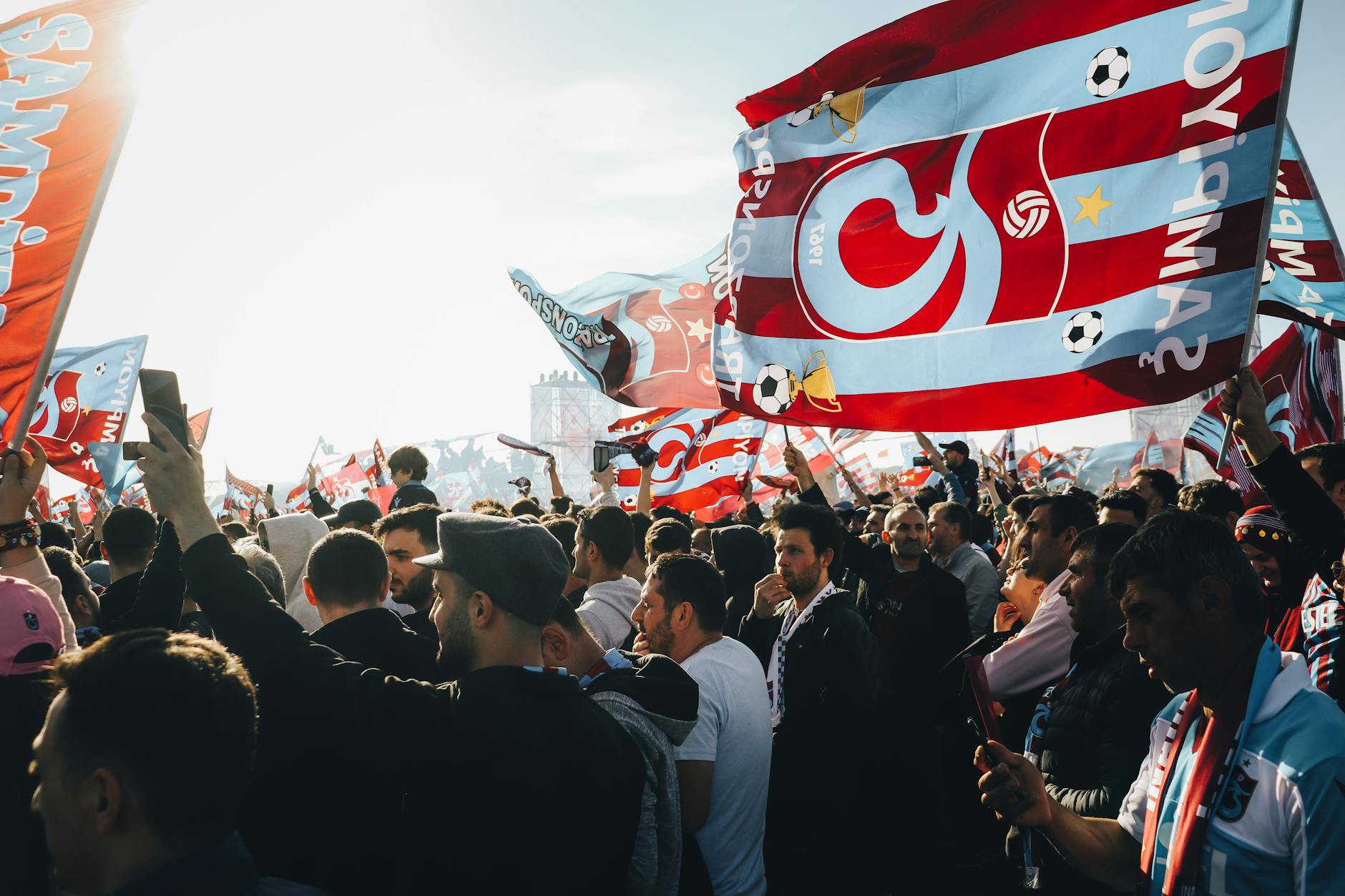
Photo by Beyza Kaplan on Pexels
The 2026 hosts present a fascinating case study. The United States enters as the weakest of the three host nations from a footballing perspective, currently ranked outside the world's top 20 by FIFA. While the Americans have improved dramatically since the 1990s, expecting them to replicate South Korea's 2002 run would require exceptional circumstances. Canada makes its World Cup debut as a host, with limited tournament experience. Mexico, the most experienced of the trio with 17 prior appearances, has never progressed beyond the quarterfinals despite hosting twice before.
So what explains this host nation "curse"? Several factors contribute: increased pressure on players and coaching staff, opponents who raise their game specifically to defeat the hosts, and tactical approaches that become predictable when teams know exactly where every match will be played. The 2026 format, with matches spread across 16 venues in three countries, also introduces travel complexity that partially negates home advantages.
Myth 2: European Teams Dominate When the Tournament Is Held Outside Europe — Partially True
A common assumption holds that European teams struggle when World Cups are staged outside Europe, and that South American teams gain a significant advantage. The data tells a more nuanced story that sophisticated analysts must understand.
Since 1930, eight World Cups have been held outside Europe: seven in the Americas (Uruguay 1930, Brazil 1950, Chile 1962, Mexico 1970, Argentina 1978, Mexico 1986, Brazil 2014, Russia 2018) and one in Asia (Japan/South Korea 2002). European teams won four of these eight tournaments: Uruguay 1930 (host victory), Argentina 1978 (host victory), Brazil 2014 (host victory), and France 2018 in Russia. Notably, France's victory in Russia marked the first time a European team won on non-European soil in 40 years, breaking a pattern that had held since 1978.

Photo by Franco Monsalvo on Pexels
The reality is more complex than simple geography. Climate and altitude still matter significantly, but modern professional football teams invest heavily in acclimatization. Germany's poor performance in Qatar 2022 had more to do with tactical inflexibility and an aging squad than with conditions in the Arabian Peninsula. Argentina's victory there demonstrated that South American quality can prevail, but so can European technique when properly applied.
For the 2026 tournament, conditions across North America will be relatively neutral for European teams. Summer temperatures in host cities range from moderate in Vancouver and Toronto to intensely hot in Phoenix and Dallas, but all venues are within ranges that European professionals regularly experience during domestic league matches. The altitude factor, most relevant in Mexico City at 2,240 meters, affects all teams equally for group stage matches held there.
Myth 3: The 48-Team Format Dilutes Tournament Quality — Flat-Out False
Perhaps the most persistent criticism of the 2026 World Cup expansion centers on perceived quality dilution. Critics argue that adding 16 more teams necessarily means including weaker nations that will produce boring matches and diminish the tournament's prestige. This assumption fundamentally misunderstands how football tournaments work and what makes World Cup football compelling.
The knockout rounds, where the real drama unfolds, will feature 32 teams in 2026 compared to 16 in the traditional format used through 1994. Critics forget that the 1982 tournament expanded to 24 teams, 1994 to 32 teams, and each expansion was met with similar complaints. Yet the quality of knockout matches has arguably improved as the global talent pool has deepened. The rise of professional football in Asia, Africa, and North America has created pathways for elite players who might otherwise have been missed.
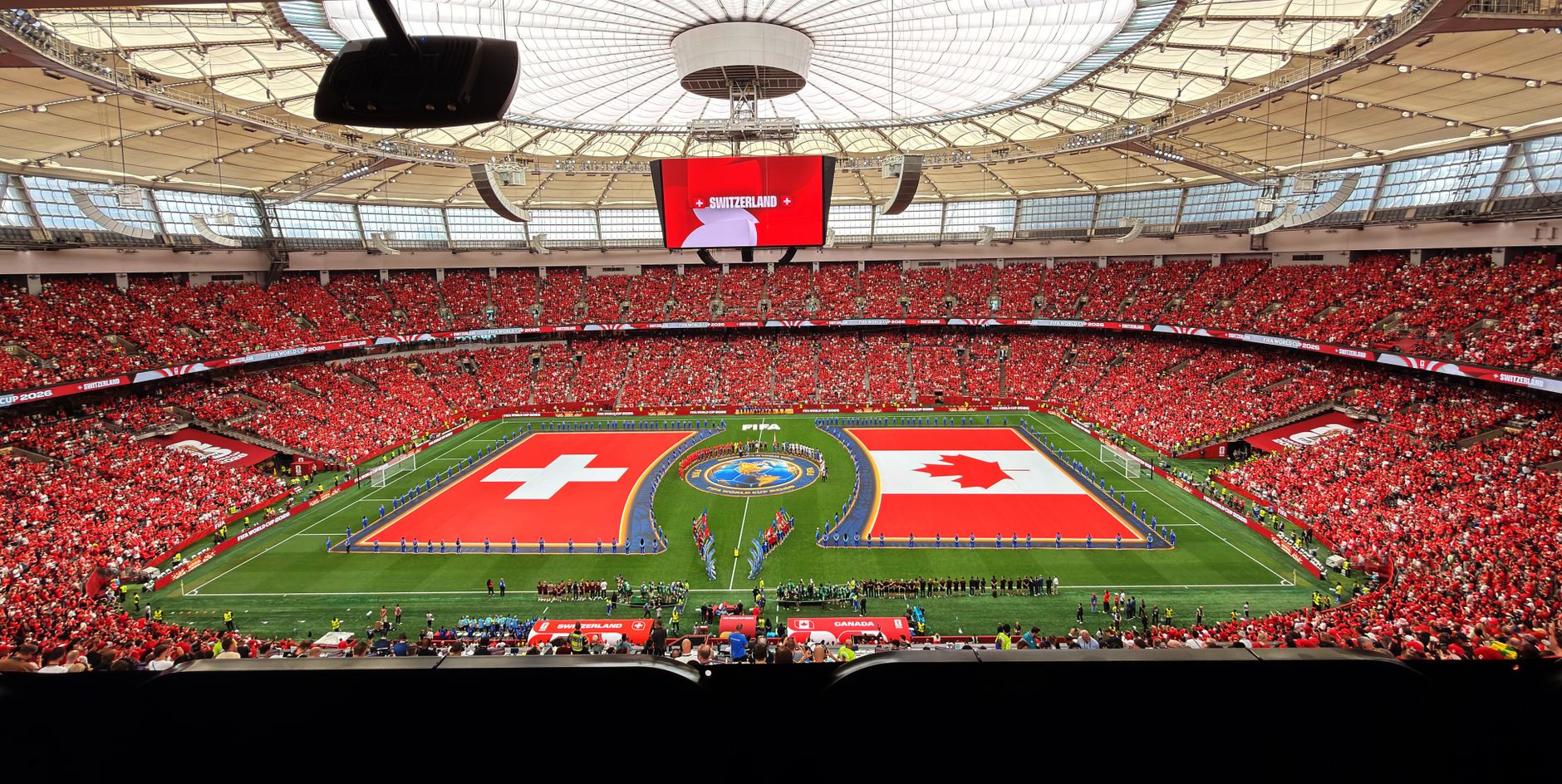
Photo by Rushi Patel on Pexels
Consider the "weaker" teams that have enriched recent World Cups. Morocco's run to the semifinals in Qatar 2022, becoming the first African and Arab team to reach that stage, demonstrated that teams from outside traditional power centers can compete at the highest level. Japan defeated both Germany and Spain in the group stage. Saudi Arabia shocked Argentina in one of the tournament's most memorable upsets. Australia, Ghana, and Cameroon have all produced memorable World Cup moments that would have been impossible under narrower formats.
The group stage in 2026 will feature 36 matches across 12 groups, with eight best third-place finishers advancing to join the group winners and runners-up. This structure means that virtually every group stage match carries implications for qualification, reducing the likelihood of meaningless dead-rubber encounters that plagued some previous tournaments. The mathematical certainty that nearly 60% of teams will advance from the group stage ensures that we won't see repeat performances of 2010's Germany vs. Australia-style matches where advancement was effectively decided with a half remaining.
What Actually Works: Key Factors for Tournament Success
After analyzing decades of World Cup data and interviewing former international coaches, several factors consistently emerge as predictors of tournament success. These insights can inform both strategic betting approaches and deeper fan engagement with the tournament.
Physical conditioning and squad depth prove decisive in tournaments spanning 32 days across multiple time zones. The 2026 format, with matches potentially spanning from late June through mid-July, requires teams to manage player fatigue across 7+ matches for deep runs. Teams with squads featuring 23 players of comparable quality, rather than relying heavily on 11-14 core contributors, consistently outperform those with thinner rosters. Germany and France, with their domestic leagues producing high-quality depth, exemplify this approach.
Tactical flexibility ranks as perhaps the most underrated success factor. Teams that can shift between formation systems mid-match, adapting to opponent strategies and match circumstances, consistently outperform rigid tactical approaches. Spain's possession-based dominance from 2008-2012 succeeded partly because they could adjust when their preferred style was disrupted. Conversely, teams that insist on single-system approaches often find themselves exposed when that system is nullified.
Goalkeeper quality matters disproportionately in tournament football. With fewer matches than domestic leagues, individual errors carry amplified consequences. The correlation between goalkeeper performance and tournament success is remarkably strong. France's Hugo Lloris, Germany's Manuel Neuer, and Argentina's Emiliano Martinez all proved decisive in recent tournaments. For 2026, teams with elite shot-stoppers like Belgium's Thibaut Courtois or Brazil's Alisson enter with structural advantages.
Mental fortitude and tournament experience also prove crucial. Teams with multiple players who have experienced deep knockout-stage runs demonstrate calmer responses to pressure situations. This "winning mentality" factor explains why Brazil, Germany, and Argentina consistently reach late tournament stages even when their squads appear vulnerable on paper.
What to Ignore: Misleading Narratives and Statistical Traps
The World Cup generates enormous media coverage, much of it designed for entertainment rather than analytical insight. Savvy observers learn to recognize and dismiss several recurring categories of misleading information.
Betting market overreactions to friendly results deserve skepticism. Pre-tournament friendlies consistently produce anomalous results that have minimal predictive value for competitive matches. Teams deliberately experiment with tactics, rest key players, and test psychological approaches in friendlies that they would never employ in competitive matches. The 3-0 victories and surprising defeats that occur in the weeks before the tournament tell us far less than many analysts claim.
Head-to-head historical records between nations carry less weight than commonly assumed. National team rosters change dramatically between tournaments, with coaches, playing styles, and entire generations of players turning over. Argentina's historical dominance over Brazil in World Cup matches reflects specific eras and specific teams rather than any structural advantage. Tunisia's historical losses to African opponents have no bearing on their 2026 campaign if their roster composition and coaching approach differ from previous encounters.
FIFA rankings should inform rather than determine expectations. The ranking system, while reasonable as a broad measure of team quality, incorporates results from matches across multiple years and competition types. A team ranked 15th globally may actually be better positioned for tournament success than a team ranked 8th if their recent form and tactical coherence are superior. The gap between 10th and 30th in the FIFA rankings often reflects match history rather than genuine competitive difference.

Photo by Lukas Blazek on Pexels
Domestic league performance does not automatically translate to international success. Players operating at elite club level under world-class coaches may struggle when surrounded by teammates of merely good rather than elite quality. The creative freedom granted at clubs like Manchester City or Real Madrid often exceeds what international coaches can provide, leading to underperformance relative to club form. Conversely, players who serve more limited roles at club level may thrive when given expanded responsibilities with their national team.
Fan Strategy's analytical approach cuts through these noise factors to identify the metrics and factors that genuinely predict World Cup success. Our model incorporates over 50 variables, weighted by their historical correlation with tournament outcomes, to generate predictions that account for factors like squad depth, tactical flexibility, and psychological readiness alongside raw quality measures.
Frequently Asked Questions
Q: How does the 2026 World Cup format differ from previous tournaments?
A: The 2026 World Cup features 48 teams (up from 32) competing in 104 matches (up from 64) across three host nations. The format includes 12 groups of four teams each, with the top two finishers plus eight best third-place teams advancing to a 32-team knockout stage. This represents the largest expansion in World Cup history, doubling the group stage matches from previous editions.
Q: Which teams are favorites to win the 2026 World Cup?
A: Brazil, France, England, Germany, and Argentina remain the primary contenders based on current FIFA rankings and squad quality. Brazil's squad depth, France's blend of experience and emerging talent, and England's recent tournament consistency make them standouts. However, the expanded format creates more variables, and teams like Spain, Portugal, and emerging Asian powers like Japan and South Korea could surprise.
Q: How does hosting across three nations affect team strategies?
A: Teams must plan for significant travel between matches, with some requiring flights of several hours between venue cities. This makes squad rotation and player recovery management more critical than ever. Teams with deeper rosters and better sports science support will have advantages in managing this logistical complexity. The variety of climates, from Mexico City's altitude to Phoenix's extreme heat, also requires careful acclimatization planning.
Q: What betting strategies work best for the expanded World Cup format?
A: Group stage betting offers the most value because information asymmetries remain significant. Casual bettors often overweight historical team reputation while underweighting recent form and emerging squad quality. The 2026 format's eight best third-place advancement slots means group stage matches remain competitive throughout, reducing the frequency of meaningless dead-rubber encounters that characterized some previous final group matchdays.
Q: How has VAR technology evolved for the 2026 tournament?
A: FIFA has committed to expanding VAR implementation in 2026, with improved camera systems and faster review protocols. The semi-automated offside technology introduced in Qatar will be standard across all venues, potentially reducing controversial decisions while accelerating review processes. However, the fundamental debates about VAR's impact on the game's flow and spirit remain unresolved.
Q: Which emerging football nations could surprise at the 2026 World Cup?
A: Japan and South Korea have both demonstrated the ability to defeat European giants in recent tournaments. Morocco's 2022 semifinal run has inspired greater ambition among African nations. Australia, Canada, and the United States benefit from hosting, though home advantage effects appear overstated historically. Teams from CONCACAF and AFC qualification zones may perform above traditional expectations given their increased exposure to competitive international football.
Q: What role does Fan Strategy play in World Cup coverage?
A: Fan Strategy provides comprehensive 2026 World Cup coverage including daily match predictions, tactical analysis, player statistics, and tournament insights. Our team of analysts combines statistical modeling with practical football expertise to deliver actionable intelligence for fans and strategic bettors. Daily updates throughout the tournament ensure subscribers stay informed as storylines develop and bracket implications emerge.
Thank you for reading.
Fan Strategy · Editorial Archive